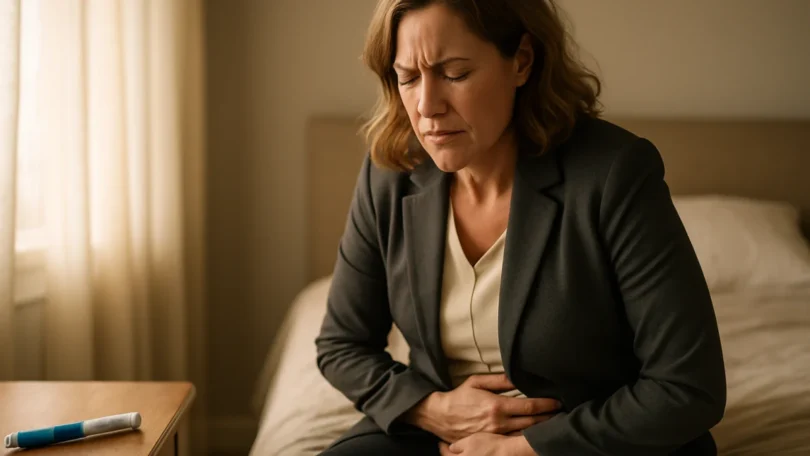

People are suing the makers of Ozempic and similar GLP-1 drugs, claiming the companies didn’t adequately warn about serious side effects. The main injuries in the lawsuits are gastroparesis (often called stomach paralysis), other severe digestive problems like bowel obstruction, and a rare form of sudden vision loss called NAION. As of early October 2026, more than 4,000 federal cases were pending, and no settlement had been announced.
If you took Ozempic, Wegovy, Rybelsus, Mounjaro, Zepbound or Trulicity and later developed one of these conditions, you may be wondering whether you have a case. Here is a plain English update on the litigation, who may qualify, and what you would need to show.
Last updated: October 2026. Case numbers and schedules change often, so check the court docket or speak with a lawyer for the latest details.
Which Drugs Are Involved
The lawsuits focus on a class of medications called GLP-1 receptor agonists. They were developed to treat type 2 diabetes, and several are also approved for weight loss.
| Drug | Active ingredient | Maker |
|---|---|---|
| Ozempic | Semaglutide | Novo Nordisk |
| Wegovy | Semaglutide | Novo Nordisk |
| Rybelsus | Semaglutide (pill) | Novo Nordisk |
| Mounjaro | Tirzepatide | Eli Lilly |
| Zepbound | Tirzepatide | Eli Lilly |
| Trulicity | Dulaglutide | Eli Lilly |
These drugs work in part by slowing how quickly food leaves the stomach, which helps people feel full longer. The lawsuits argue that in some patients this effect went too far, and that the companies knew or should have known about the risk and didn’t warn doctors and patients clearly enough.
The Injuries Named in the Lawsuits
Gastroparesis
Gastroparesis is a condition where the stomach empties far too slowly. Symptoms include severe nausea, repeated vomiting, feeling full after a few bites, bloating, stomach pain and weight loss that isn’t intended. Some people need hospital stays, feeding tubes or long term treatment.
Other digestive injuries
Lawsuits also involve bowel obstruction (a blockage in the intestines), ileus (when the intestines stop moving food along), and severe cyclic vomiting.
NAION (sudden vision loss)
NAION stands for non arteritic anterior ischemic optic neuropathy. It happens when blood flow to the optic nerve is reduced, and it typically causes sudden, painless vision loss in one eye. The loss is often permanent. Studies published in recent years raised concerns about a possible link with semaglutide, and in 2025 the European Medicines Agency added NAION as a very rare side effect of semaglutide medicines. Other regulators have since issued their own warnings.
Where the Cases Are Now
Most federal lawsuits have been combined into a multidistrict litigation, or MDL. An MDL brings similar cases from around the country before one judge to handle shared issues like evidence and expert testimony. Each person still has their own individual case.
The digestive injury MDL (MDL 3094)
The GLP-1 digestive injury cases are before Judge Karen Spencer Marston in the U.S. District Court for the Eastern District of Pennsylvania. As of early October 2026, about 4,000 cases were pending there.
A key ruling came in August 2025. The court held that people claiming gastroparesis must support the diagnosis with objective testing, specifically a properly performed gastric emptying study. The same ruling dismissed some design defect claims but allowed claims based on inadequate warnings and certain state law claims to move forward. That decision shaped who can realistically bring a gastroparesis case.
The vision loss MDL (MDL 3163)
NAION cases were split into their own MDL in December 2025, also before Judge Marston. A few hundred cases were pending as of October 2026. Rather than going straight to test trials, the judge ordered early proceedings on big picture questions: whether the science supports a causal link, whether federal law preempts the warning claims, and whether the existing labels were adequate. Under the current schedule, fact discovery against the drug makers runs into early 2027, with expert challenges and summary judgment motions due in mid 2027.
State court cases
Some cases are also proceeding in state courts, including in New Jersey, where Novo Nordisk’s U.S. operations are based.
Has There Been a Settlement?
No. As of October 2026 there was no global settlement in either MDL, and no trials had produced verdicts. Anyone quoting a specific “Ozempic settlement amount” is giving an estimate, not a real figure. Mass tort cases like this often take several years before settlement talks become serious, usually after early test trials, called bellwether trials, show how juries react to the evidence.
Who May Qualify
Every law firm sets its own criteria, and the court’s rulings shape them. In general, people who may qualify:
- Took one of the GLP-1 drugs listed above, with prescription or pharmacy records to prove it
- Were diagnosed with gastroparesis, bowel obstruction, ileus or NAION after starting the drug
- For gastroparesis claims, have a gastric emptying study confirming the diagnosis, based on the August 2025 ruling
- For NAION, have an eye specialist’s diagnosis confirming the condition
- Suffered real harm, such as hospitalization, surgery, ongoing treatment, lost work or permanent vision loss
- Are still within their state’s statute of limitations
People who had a gastroparesis diagnosis before starting the drug, or who can’t document their use, will usually find it harder to bring a claim.
Records You Will Need
- Pharmacy records showing which GLP-1 drug you took, the dose and the dates
- Medical records showing your diagnosis and when symptoms began
- Test results, especially a gastric emptying study for gastroparesis or eye exam records for NAION
- Hospital and ER records
- Bills and proof of lost income
- Notes on how the condition affects your daily life
Request these records early. Getting them from multiple providers can take weeks.
Watch the Statute of Limitations
Each state limits how long you have to file a lawsuit, often two or three years. In drug injury cases, the clock may start when you were diagnosed or when you reasonably should have connected the injury to the drug, depending on your state’s rules. Waiting for a settlement announcement before acting can be risky, because your deadline may pass first.
What About Compounded Semaglutide?
During the shortage years, many people used compounded semaglutide or tirzepatide from compounding pharmacies or telehealth services. Claims involving compounded versions are more complicated, because Novo Nordisk and Eli Lilly didn’t make those products. If you used a compounded drug, ask a lawyer specifically whether your situation fits the existing lawsuits.
Why These Cases Take Years
People who file often expect a quick payout, and it rarely works that way. A drug MDL usually moves through several stages:
- Pleadings and early motions. The drug makers ask the court to dismiss claims, often arguing that federal drug law blocks state warning claims.
- Discovery. Both sides exchange internal documents, studies, emails and safety data, and take depositions of company employees.
- Expert fights. Each side presents scientists and doctors. The judge decides whose expert testimony is reliable enough for a jury to hear. This stage can make or break an entire litigation.
- Bellwether trials. A small number of representative cases go to trial so both sides can see how juries respond.
- Settlement talks. If plaintiffs win some bellwethers or survive the expert stage, settlement discussions often follow.
The GLP-1 cases are still in the earlier stages. The NAION track in particular is focused on whether the science supports a link at all. That is why it is important to file within your deadline but keep realistic expectations about timing.
What the Drug Makers Say
Novo Nordisk and Eli Lilly deny the claims. They point out that nausea, vomiting and other digestive side effects are listed on the labels, that the drugs were approved by the FDA after clinical trials, and that the benefits for people with diabetes and obesity are significant. They also argue that some of the conditions in the lawsuits occur in people with diabetes or obesity regardless of medication. These are the arguments plaintiffs will have to overcome, and they are a big reason why outcomes are uncertain.
Should You Stop Taking Your Medication?
Not on your own. These drugs help many people manage diabetes and weight related health problems. If you are worried about side effects, talk to your doctor before making any changes. Report new symptoms like persistent vomiting, severe stomach pain or sudden vision changes right away. Sudden vision loss is a medical emergency.
Symptoms Worth Mentioning to Your Doctor
Even if you never plan to file a lawsuit, these symptoms deserve medical attention if you take a GLP-1 drug: vomiting that keeps coming back, being unable to keep food or fluids down, severe or lasting stomach pain, a swollen belly, constipation with pain and vomiting, signs of dehydration, or any sudden change in your vision. Tell your doctor which medication you take and when the symptoms started. Clear notes in your chart help your health care and, if it ever comes to it, your claim.
What Happens if You File
If you hire a lawyer, they will usually file your case in or transfer it to the MDL. Your case then waits while the court works through shared issues. You may be asked to fill out a detailed questionnaire about your medical history and drug use, called a plaintiff fact sheet. Most people never have to go to court in person unless their case is picked for a bellwether trial.
Mass tort lawyers almost always work on contingency, so there is no upfront cost. Ask any firm you speak with how they handle case costs and what percentage they charge.
A Quick Example
Rachel started Wegovy for weight loss and, about five months in, began vomiting several times a week. She lost weight much faster than expected and was hospitalized twice. Her gastroenterologist ordered a gastric emptying study, which confirmed severe gastroparesis. She has pharmacy records showing her prescriptions and no prior stomach problems. On those facts, she fits the profile many firms are looking for. A friend of hers had similar symptoms but never had the gastric emptying test. Under the 2025 ruling, her friend would likely need that test before a lawyer could move forward.
What to Do Next
If you developed severe digestive problems or sudden vision loss while taking a GLP-1 drug, start by talking to your doctor about your health. Then gather your pharmacy and medical records and ask a mass tort lawyer for a free case review. Ask specifically whether you have the testing the court now requires, and how much time remains under your state’s deadline.
Sources
- U.S. District Court, Eastern District of Pennsylvania: MDL Information
- Judicial Panel on Multidistrict Litigation: Pending MDL Statistics
- European Medicines Agency: Semaglutide Safety Update
- U.S. Food and Drug Administration: Drug Safety Communications
- Lawsuit Information Center: Ozempic Litigation Updates
This article is for general information only and is not legal advice. Laws change and every case is different, so speak with a licensed attorney in your state about your own situation.
Frequently Asked Questions
Is there an Ozempic class action lawsuit?
Most cases are individual lawsuits combined in a federal MDL, not a single class action. Each person brings their own claim based on their own injuries.
Has there been an Ozempic settlement?
Not as of October 2026. No global settlement has been announced and no trial verdicts have been reached.
Do I need a gastric emptying study to file a gastroparesis claim?
In the federal MDL, the court ruled in August 2025 that gastroparesis claims must be supported by a properly performed gastric emptying study.
Does the lawsuit include Mounjaro and Zepbound?
Yes. Cases involve Eli Lilly’s tirzepatide drugs as well as Novo Nordisk’s semaglutide drugs, along with Trulicity.
What is NAION?
NAION is a condition where reduced blood flow damages the optic nerve, causing sudden vision loss in one eye. Those claims are in a separate federal MDL.
How much could an Ozempic lawsuit pay?
Nobody knows yet. Any number you see is an estimate. Payouts in mass torts depend on injury severity, evidence and eventual settlement terms.
Does it cost money to join the lawsuit?
Mass tort lawyers typically work on contingency, so there is usually no upfront fee.