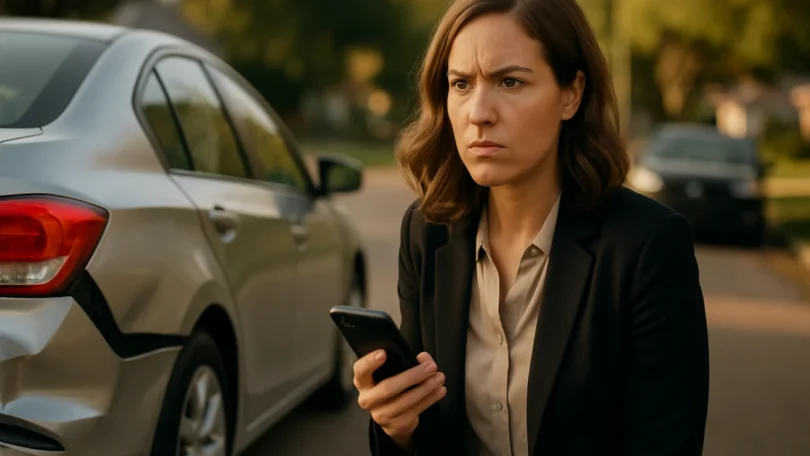

If another driver hit you, their insurance company should pay for your car repairs, your medical bills and the income you lose while you recover. That is the short answer. The longer answer is that getting all of it paid depends a lot on what you do in the first hours and weeks after the crash.
Most people assume that being clearly not at fault means the money will simply arrive. It rarely works that way. The other driver’s insurer is a business, and its job is to close your claim for as little as it reasonably can. The steps below are the ones that protect you, in the order you will actually face them.
At the Scene: The First 30 Minutes
Your first job is safety. If the cars can be moved and nobody is badly hurt, pull over to the shoulder or a nearby parking lot and turn on your hazard lights. If anyone is injured, or if a car can’t be moved, leave everything where it is and call 911.
Call the police, even for a small crash
Many drivers skip this when the damage looks minor. That is a mistake. A police report is the closest thing you will have to a neutral record of what happened. It usually notes where the cars ended up, what each driver said, whether anyone got a ticket and who the officer believed caused the crash. Insurers take these reports seriously.
Some police departments won’t send an officer to a minor accident with no injuries. If that happens, ask how to file a report yourself, either online or at the station. Most states require a report when there are injuries or damage above a set dollar amount, and that threshold is often lower than people think.
Swap information, but don’t argue
Get the other driver’s name, phone number, driver’s license number, license plate, insurance company and policy number. A quick photo of their license and insurance card is the fastest way to do it.
Be polite and keep it short. Don’t say “I’m sorry” or “I didn’t see you either,” even if you are just being friendly. Those words can show up later in a claim file as an admission that you were partly to blame.
Take more photos than you think you need
Photograph both cars from several angles, the damage up close, the road, skid marks, traffic lights or signs, the weather, and any visible injuries. If there are witnesses, ask for their names and numbers. A witness who says the other driver ran the red light can end an argument about fault before it starts.
The Same Day: Get Checked by a Doctor
Adrenaline hides pain. It is very common to feel fine at the scene and wake up the next morning with a stiff neck, a headache or back pain. Injuries like whiplash and concussions often take hours or days to show up fully.
Going to urgent care, an ER or your own doctor within a day or two does two things. First, it protects your health. Second, it creates a medical record that links your injuries to the crash. If you wait two or three weeks, the insurer will argue that something else must have caused the pain, and they will offer less because of the gap.
Once you start treatment, follow it. Go to the physical therapy appointments. Fill the prescriptions. Skipped appointments are one of the most common reasons adjusters cut an injury payout.
Within a Few Days: Report the Claim
You have two options for getting paid when you are not at fault, and it helps to understand both.
| Option | How it works | Good for |
|---|---|---|
| Third party claim | You file directly with the at fault driver’s insurance company. | Getting paid without touching your own policy or deductible. |
| First party claim | You file with your own insurer, which pays you and then goes after the other company (this is called subrogation). | Faster repairs, especially if the other insurer is slow or disputing fault. |
Even if you plan to claim against the other driver, tell your own insurance company about the accident. Most policies require prompt notice, and failing to report can create problems later if the other driver turns out to be uninsured or the claim gets complicated.
One important note: about a dozen states use a “no fault” system for injuries. In those states, your own personal injury protection coverage pays your medical bills first, no matter who caused the crash. Property damage still goes against the at fault driver. If you live in a no fault state, the injury side of your claim works differently, and you can only step outside that system if your injuries cross a certain threshold.
When the Other Driver’s Insurer Calls
Expect a call from an adjuster within a few days, sometimes the same day. They will sound friendly and helpful. Some of them genuinely are. But remember who they work for.
You don’t have to give a recorded statement
The adjuster will often ask to record your account of what happened. You are not legally required to give a recorded statement to the other driver’s insurer. These recordings are used to look for small inconsistencies and to lock you into saying you “feel okay” before your injuries are fully known. You can politely decline and give the basic facts in writing instead.
Don’t sign a medical release that covers everything
Adjusters sometimes send a broad authorization that lets them pull your entire medical history. They are looking for an old injury they can blame instead of the crash. Only share records related to this accident.
Don’t accept the first offer too quickly
Early offers often come before you know the full cost of your injuries. Once you accept and sign a release, the claim is closed for good. If your back turns out to need surgery six months later, you can’t go back and ask for more.
What You Can Claim
When someone else causes a crash, you can usually claim for:
- Car repairs or replacement if the car is totaled, based on its market value before the crash
- A rental car while yours is in the shop
- Medical bills, including ambulance, ER, follow up visits, physical therapy and prescriptions
- Future medical costs if your doctor expects ongoing treatment
- Lost wages for the days you missed work, plus lost earning ability if the injury is long term
- Pain and suffering, which covers physical pain, stress, lost sleep and the ways the injury affected your daily life
- Diminished value, the drop in your car’s resale value after a major repair, in states that allow it
Keep a Simple Claim File
You don’t need anything fancy. A folder on your phone or a box on your kitchen counter is enough. Put everything in it:
- The police report number and a copy of the report once it is ready
- Photos and witness details
- Every medical bill, receipt and visit summary
- Repair estimates and rental car receipts
- A note from your employer showing the hours you missed
- A short journal of how you feel each day and what you couldn’t do
That journal sounds small, but it matters. Six months from now you will not remember that you couldn’t pick up your kid for three weeks, or that you missed your sister’s wedding because sitting in a car hurt too much. Those details are what pain and suffering is about.
A Quick Example
Say you are stopped at a red light in Phoenix when a pickup truck rear ends you. Your bumper is crushed and your neck hurts that evening. You see a doctor the next morning and are diagnosed with a neck strain, then do six weeks of physical therapy and miss five days of work.
In a case like this, the other driver’s insurer would usually owe your repair bill, a rental car, your medical and therapy costs, your lost pay and an amount for pain and suffering. If you had waited three weeks to see a doctor, skipped half your therapy and told the adjuster on a recorded call that you were “fine,” that same claim would likely be worth far less. Same crash, very different result.
Getting Your Car Fixed
You have the right to choose your own repair shop in most states, even if the insurer pushes you toward one of its “preferred” shops. Preferred shops can be convenient, but you are not required to use them. Get an estimate from a shop you trust and send it to the adjuster.
If the insurer says your car is a total loss, they owe you its actual cash value right before the crash, not what you still owe on your loan. Look up comparable cars for sale in your area with similar mileage and features. If their number is low, send those listings and ask them to adjust. Many people leave hundreds or even thousands of dollars on the table by accepting the first total loss figure.
Watch the Deadline
Every state has a statute of limitations for injury claims, usually somewhere between one and six years, with two or three years being the most common. If you haven’t settled or filed a lawsuit by then, you lose the right to claim. Property damage often has a separate deadline. Some claims against government vehicles, like a city bus, have much shorter notice deadlines, sometimes only a few months.
Don’t let a slow adjuster run out your clock. If months are passing without a fair offer, that is a sign to get legal advice.
When to Talk to a Lawyer
Plenty of small fender benders get settled without a lawyer. You should seriously consider one if:
- You were hurt badly enough to need ongoing treatment, surgery or time off work
- The insurer is blaming you for part of the crash
- The other driver had no insurance or not enough of it
- A commercial vehicle, rideshare driver or government vehicle was involved
- The offer doesn’t come close to covering your bills
Most personal injury lawyers offer a free consultation and work on contingency, meaning they are paid a percentage of what you recover and nothing if you don’t win. It costs nothing to find out whether your claim is worth more than the insurer is offering.
What to Do Next
If the crash just happened, focus on three things today: get medical care, report the accident to the police and your insurer, and save every photo and receipt. Then slow down. Don’t rush into a recorded statement or a quick settlement. A few careful steps now are what separate a fair payout from a frustrating one.
Sources
- NHTSA: Road Safety and Crash Information
- Insurance Information Institute: Auto Insurance Basics
- National Association of Insurance Commissioners: Consumer Resources
This article is for general information only and is not legal advice. Laws change and every case is different, so speak with a licensed attorney in your state about your own situation.
Frequently Asked Questions
Will my insurance go up if the accident wasn't my fault?
In most states, insurers are not supposed to raise your rates for an accident you didn’t cause, and many states have laws that limit it. It can still happen in some cases, so ask your insurer how they handle not at fault claims.
Should I file with my insurance or the other driver's?
You can do either. Filing with the other driver’s insurer avoids your deductible. Filing with your own insurer is often faster, and they will try to recover your deductible from the other company later.
Do I have to talk to the other driver's insurance adjuster?
You need to give them basic facts to open a claim, but you don’t have to give a recorded statement or answer detailed questions about your injuries before you are ready.
How long do I have to file a claim after a car accident?
Insurance policies ask for prompt notice, often within days. The legal deadline to sue is set by your state and is usually two to three years for injuries, though some states allow less or more time.
What if I didn't feel hurt until days later?
That is very common. See a doctor as soon as symptoms appear and tell them about the crash. A delay of a day or two is normal, but long gaps make claims harder.
Can I still claim if the other driver has no insurance?
Often yes, through uninsured motorist coverage on your own policy if you have it. Check your policy or ask your agent.