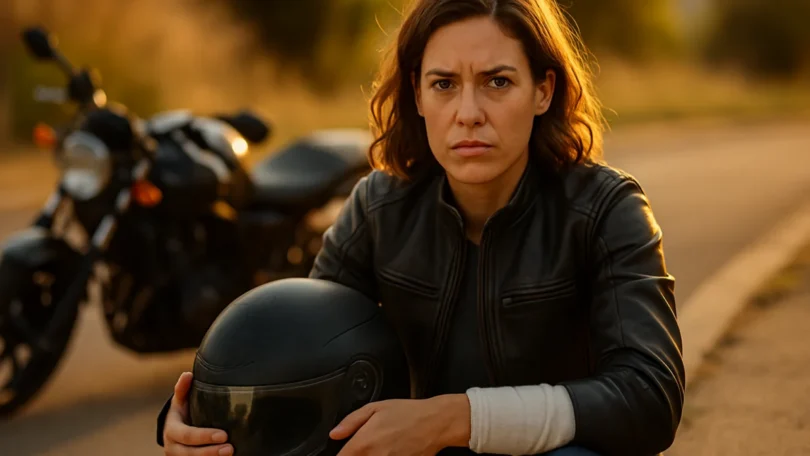

Motorcycle accident claims work much like car accident claims: the at fault driver’s insurance should pay for your injuries, lost income, bike damage and pain and suffering. The big difference is bias. Insurance adjusters, and sometimes jurors, tend to assume motorcyclists were speeding or riding recklessly, even when a car driver clearly caused the crash. Overcoming that assumption with evidence is often the key to a fair payout.
Riders also tend to suffer more serious injuries than people in cars, because there is no metal frame, airbag or seatbelt between them and the road. That combination, serious injuries and a built in bias, makes motorcycle claims both high stakes and hard fought.
Why Motorcycle Crashes Are So Dangerous
Federal safety data has long shown that motorcyclists are far more likely to be killed in a crash than car occupants per mile traveled. Even crashes at moderate speeds can cause:
- Traumatic brain injuries
- Spinal cord injuries
- Broken legs, arms, pelvis and ribs
- Road rash, which can require skin grafts
- Internal injuries
- Amputations
Because injuries are often severe, motorcycle claims can be worth significantly more than typical car claims, which also means insurers fight harder over them.
How Bias Shows Up in Motorcycle Claims
The adjuster assumes you were speeding
Many people picture motorcyclists weaving through traffic at high speeds. Adjusters may start from that assumption and try to assign you a share of fault, even without evidence.
Witnesses fill in gaps
Witnesses who didn’t actually see the moment of impact sometimes say the motorcycle “came out of nowhere” or “must have been going fast.” That phrase usually means the driver didn’t look carefully, but it can be used against you.
Juries may share the bias
Insurers consider how a jury might react when deciding how much to offer. If they think jurors will view a rider negatively, they offer less.
Your gear and appearance become an issue
Not wearing a helmet, even where it is legal, or wearing minimal protective gear can be used to argue that your injuries are partly your own fault.
The Most Common Way These Crashes Happen
A large share of serious motorcycle crashes involve another vehicle, and one of the most common scenarios is a car turning left in front of an oncoming motorcycle at an intersection. Drivers often say they “didn’t see” the bike. Motorcycles are smaller and harder to judge for speed and distance, but drivers still have a legal duty to look and yield.
Other common causes include:
- Cars changing lanes into a motorcycle in a blind spot
- Drivers opening car doors into a rider’s path
- Rear end crashes at stoplights
- Distracted drivers drifting across lanes
- Road hazards like potholes, gravel or uneven pavement
Helmet Laws and Your Claim
Helmet laws vary across the country. Some states require all riders to wear helmets. Many require helmets only for younger riders or riders without certain insurance. A few have no helmet law at all.
Not wearing a helmet doesn’t usually prevent you from recovering compensation when someone else caused the crash. But it can affect the value of your claim. Insurers may argue that a head injury would have been less severe with a helmet. In many states, that argument can reduce your damages for head injuries under comparative fault rules. It generally shouldn’t affect damages for a broken leg or other injuries a helmet wouldn’t have prevented.
Lane Splitting and Filtering
Lane splitting means riding between lanes of slow or stopped traffic. California explicitly allows it, and a few other states now allow limited forms, like filtering between stopped cars at intersections. In most states it is not allowed. If you were lane splitting where it is illegal, the insurer will likely argue you share fault. Where it is legal, it shouldn’t be held against you if you were doing it safely.
How Comparative Fault Affects Riders
Because bias often leads insurers to push some blame onto riders, comparative fault rules matter a lot. In most states, your compensation is reduced by your percentage of fault. In some states, you lose your right to recover if your fault reaches 50 or 51 percent. A few places bar recovery for any fault at all. Pushing back on unfair fault percentages is often worth thousands of dollars.
Evidence That Fights Bias
| Evidence | How it helps |
|---|---|
| Helmet camera or dashcam footage | Shows your speed, position and the driver’s actions directly |
| Police report and citations | A ticket for failure to yield is strong evidence of fault |
| Independent witnesses | Neutral accounts carry more weight than the driver’s |
| Accident reconstruction | Experts can calculate speed from skid marks, damage and final positions |
| Photos of the scene | Show sight lines, signals and road conditions |
| Your riding record and training | A clean record and safety course completion counter the reckless rider image |
| Gear photos | Show you were wearing protective equipment |
Many riders now use helmet cameras for exactly this reason. Footage can end a fault argument instantly.
How Adjusters Use Your Words Against You
Riders are sometimes asked casual questions that seem harmless, like “How long have you been riding?”, “Do you ride with a group?” or “What kind of bike is it?” A sport bike, a group ride or a comment about enjoying speed can all feed the reckless rider image. Answer honestly but briefly, and don’t volunteer extra details. Focus on the facts of the crash: where you were, what the other driver did and what happened next.
Single Vehicle Crashes and Road Hazards
Not every motorcycle crash involves another vehicle. Potholes, loose gravel, uneven pavement, poorly marked construction zones and slippery road paint are far more dangerous for two wheels than four. If a road defect caused your crash, the government agency responsible for that road, or a construction contractor, may be liable. These claims often have short notice deadlines, sometimes only a few months, and specific rules for suing a government entity. Photograph the hazard right away and talk to a lawyer quickly.
Passengers on Motorcycles
If you were a passenger on a motorcycle, you may have a claim against the at fault driver of another vehicle, or against your own rider if they caused the crash. Passengers are rarely found at fault themselves. The rider’s motorcycle insurance may include coverage for passengers, though some policies limit or exclude it, so the policy details matter.
What You Can Recover
- Medical bills, including surgery, skin grafts and rehabilitation
- Future medical care
- Lost income and lost earning ability
- Pain and suffering
- Scarring and disfigurement
- Motorcycle repair or replacement
- Damaged gear, like helmets, jackets and boots, which can be expensive
Don’t forget the gear. A quality helmet and riding jacket can cost hundreds or thousands of dollars, and most helmet makers recommend replacing a helmet after any crash.
Insurance Issues for Riders
Many drivers carry only state minimum liability limits, which may be far too low for a serious motorcycle injury. Check your own motorcycle policy for uninsured and underinsured motorist coverage. It can make up the difference when the at fault driver’s insurance runs out. Some riders skip this coverage to save money, which can be a costly decision after a serious crash.
Also note that in no fault states, personal injury protection rules often treat motorcycles differently than cars. Riders sometimes aren’t covered by PIP the same way, which can change how medical bills are paid. Check your policy and state rules.
Road Rash Is More Serious Than It Sounds
People sometimes treat road rash as a minor scrape. Severe road rash can be closer to a burn, leading to infection, nerve damage, skin grafts and permanent scarring. Photograph it throughout healing and keep records of wound care visits. Scarring, especially on visible areas, can be a significant part of a motorcycle claim’s value.
What to Do After a Motorcycle Crash
- Get medical care immediately, even if you feel okay. Adrenaline masks serious injuries.
- Call the police and make sure your account is included in the report.
- Save your helmet camera footage right away.
- Photograph the scene, vehicles, your bike, your gear and your injuries.
- Get witness contact information.
- Don’t admit fault or speculate about your speed.
- Keep your damaged gear. It is evidence.
- Avoid recorded statements to the other driver’s insurer until you have advice.
A Quick Example
Danielle is riding through an intersection in Phoenix on a green light when an SUV turns left in front of her. She is thrown from her bike and breaks her wrist and collarbone. The SUV driver tells police he “never saw her” and a witness says she seemed to be “going fast.”
The insurer initially argues Danielle was 40 percent at fault for speeding. But her helmet camera shows she was traveling at the speed limit, and the police cited the driver for failure to yield. With that evidence, the insurer drops the fault argument and the claim moves forward based on her injuries, missed work and damaged gear. Without the footage, she might have lost a large share of her recovery to an assumption.
Choosing a Lawyer for a Motorcycle Case
If you were seriously hurt, look for a lawyer who regularly handles motorcycle cases. Many are riders themselves and understand bikes, gear and how crashes happen. They know how to present a rider to an insurer or jury in a way that counters bias. Ask how many motorcycle cases they have handled and whether they use accident reconstruction experts.
Protect Your Claim on Social Media
Riders often share photos and stories from rides and events online. During a claim, insurers may look at those posts for anything suggesting reckless riding or that you aren’t as injured as you say. Old videos of fast riding or new posts from a bike event during your recovery can both cause problems. Set your profiles to private and avoid posting about the crash or your activities until your claim is resolved.
What to Do Next
Get medical care, save your footage and keep your damaged gear. Write down your own account while it is fresh, including your speed and lane position. If the insurer starts blaming you or your injuries are serious, talk to a motorcycle accident lawyer before you give a statement or accept an offer. Riders have every right to fair compensation, and good evidence is the best answer to bias.
Sources
- NHTSA: Motorcycle Safety
- Insurance Institute for Highway Safety: Motorcycle Helmet Laws
- Motorcycle Safety Foundation
This article is for general information only and is not legal advice. Laws change and every case is different, so speak with a licensed attorney in your state about your own situation.
Frequently Asked Questions
Should I keep my damaged helmet?
Yes. Your helmet and gear are evidence of the impact and your safety precautions. Don’t throw them away until your claim is resolved.
How long do I have to file a motorcycle accident claim?
Most states allow two to three years for injury claims, but claims involving government road defects can require notice within months.
Can I get compensation if I wasn't wearing a helmet?
Usually yes if someone else caused the crash, but not wearing a helmet may reduce damages for head injuries in some states.
Who is usually at fault in a motorcycle accident?
Many crashes involving another vehicle are caused by drivers who fail to see or yield to motorcycles, especially when turning left.
How much is a motorcycle accident claim worth?
It depends on your injuries, lost income, fault and available insurance. Serious injuries often make motorcycle claims worth more than typical car claims.
Does lane splitting affect my claim?
Where lane splitting is illegal, insurers may argue you share fault. Where it is legal, it shouldn’t count against you if done safely.
Can I claim for my damaged riding gear?
Yes. Helmets, jackets, boots and other gear damaged in the crash can be part of your property damage claim.
Why do insurers offer motorcyclists less?
Bias against riders can lead insurers to assume shared fault. Strong evidence like video and police citations helps counter it.